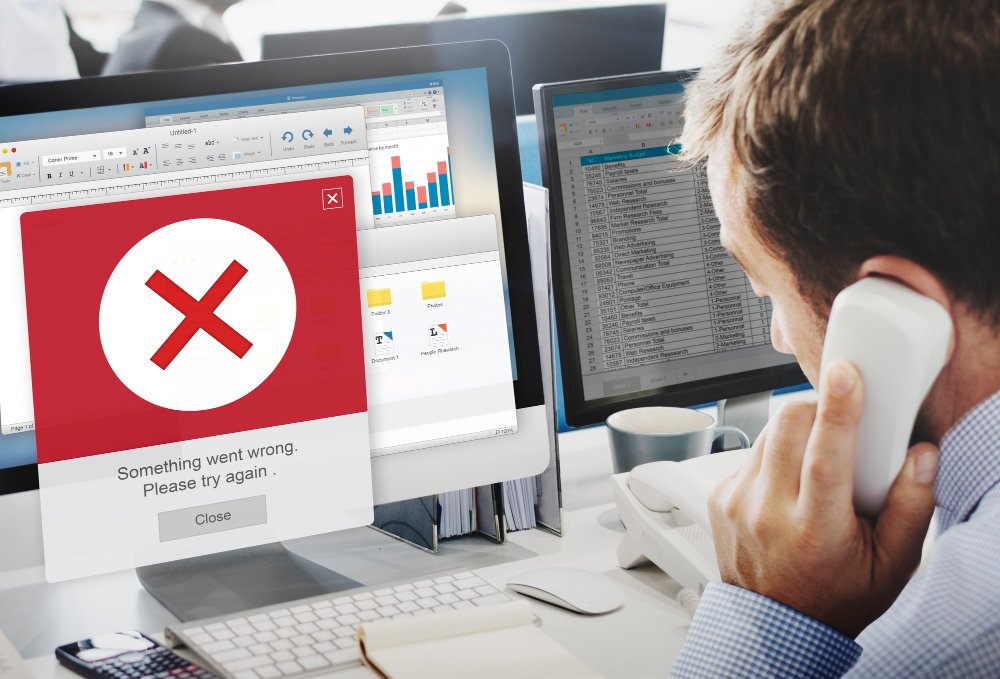
Many growing SMEs believe that ERP customization is the key to making the system fit their business. They expect the software to adjust to every small need. While customization can be useful, it often fails when there is no clear process ownership inside the organization.
The real problem is not technology. It is unclear responsibility, undefined processes and lack of internal accountability.
During ERP implementation, businesses often focus on changing the software instead of improving their processes. Every department asks for modifications. Reports are redesigned multiple times. Extra fields and screens are added without proper review.
Over time, the system becomes complex. It slows down performance and increases dependency on technical teams. When upgrades are required, heavy customization creates further complications.
This happens because no one clearly owns the process. Without process ownership, customization becomes reactive instead of strategic.
Process ownership means that a specific person or team is responsible for how a business process works from start to finish. For example, order-to-cash, procure-to-pay or production planning should have clear accountability.
When there is ownership, decisions are based on improving efficiency and control. When there is no ownership, changes are driven by individual preferences.
ERP systems like SAP Business One are built on structured business processes. They are designed using global best practices. Instead of changing the system to match informal workflows, SMEs should review and standardize their internal processes first.
Customization without process clarity leads to confusion. Teams continue to work in old ways while expecting new software to fix operational issues. This creates gaps between system data and real operations.
Another common issue is lack of documentation. When processes are not clearly defined, employees interpret them differently — this also leads to poor master data quality. As a result, ERP workflows are used incorrectly or bypassed.
In the long run, this reduces the value of the ERP investment. Businesses do not get the full benefit of automation, reporting or real-time visibility.
The first step is to review and document core business processes before making changes to the ERP system. Leadership must identify process owners for each major function, such as sales, finance, inventory and procurement.
These process owners should work closely with the ERP partner to map workflows correctly. Customization should only be done when it adds measurable business value, not just convenience — see how industry add-ons deliver value without destabilising the system.
It is also important to train teams properly. Employees must understand why processes are structured in a certain way. When people see the benefit, adoption improves naturally.
SAP Business One already includes strong process frameworks for finance, sales, purchasing and operations. Many SMEs discover that most of their needs are already covered within the standard system.
Instead of heavy customization, businesses can configure the system to match their operations while keeping the core structure intact. This approach ensures stability, easier upgrades and long-term scalability.
Successful ERP projects require both technical expertise and process understanding. This is where InfoWorld adds value.
With decades of legacy experience and strong expertise in SAP Business One implementation, InfoWorld focuses on aligning ERP with real business processes. The approach is not to over-customize, but to simplify, standardize and optimize.
InfoWorld works closely with business leaders to define clear process ownership, map workflows correctly and implement SAP Business One in a structured way. With industry-specific experience and long-term support, businesses gain a stable ERP system that supports growth instead of creating complexity.
When ERP is implemented with the right guidance and strong internal ownership, it becomes a foundation for efficiency, control and sustainable expansion.
Certified SAP B1 implementation and support in Pune, Maharashtra since 1990.
Process-level ERP failure analysis and fixes.
Post-go-live ERP success strategies.
Process-aligned ERP customization by InfoWorld India.


